Alert level
Advisory
Aviation color code Yellow
Halemaʻumaʻu crater · Hawaiʻi Volcanoes National Park
Is Kīlauea erupting right now?
Paused after episode 55
The Halema'uma'u eruption of Kīlauea is currently paused after episode 55 fountaining ended yesterday at 9:03 a.m. HST. Summit reinflation continues today following the end of the fountaining.
USGS Hawaiian Volcano Observatory · Daily Update · Sunday, October 18, 2026, 10:30 AM HST
Live readings pulled from USGS. Refreshes every few minutes.
Advisory
Aviation color code Yellow
55
Paused between episodes
–
Within 60 km of the summit
Oct 18, 10:30 AM HST
Daily Update
The summit eruption of Kīlauea in Halemaʻumaʻu is paused following 5.7 hours of lava fountaining during episode 55 on October 17, 2026.
Still images from the USGS Hawaiian Volcano Observatory cameras, reloaded every minute. Click any camera to view it large.
USGS streams three summit cameras around the clock. Click a player to start it. Night views go dark unless there is glow from lava.
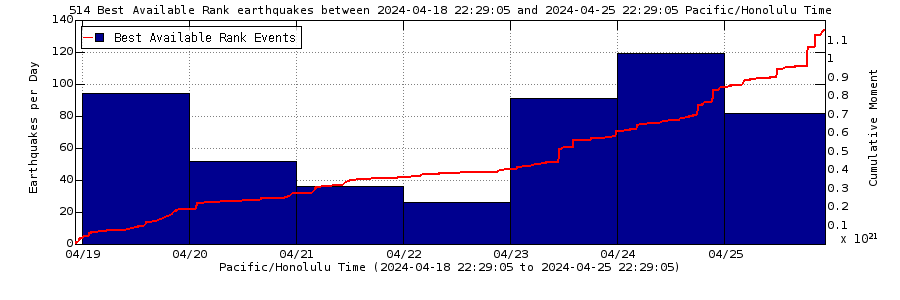
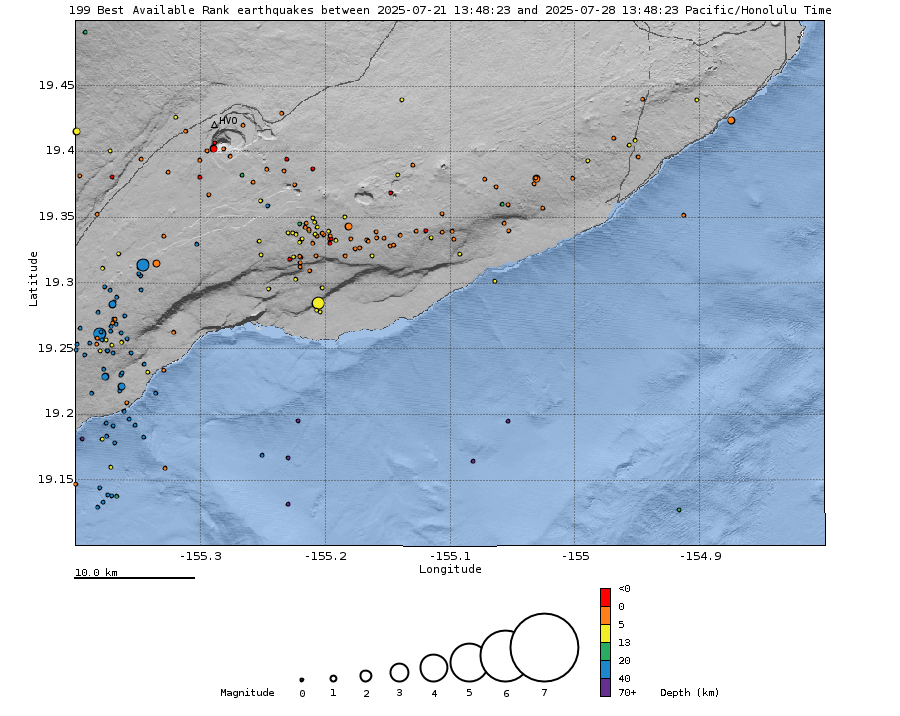
USGS imagery and topographic base maps (public domain). Circles are earthquakes from the past 7 days, sized by magnitude. Camera positions are approximate.
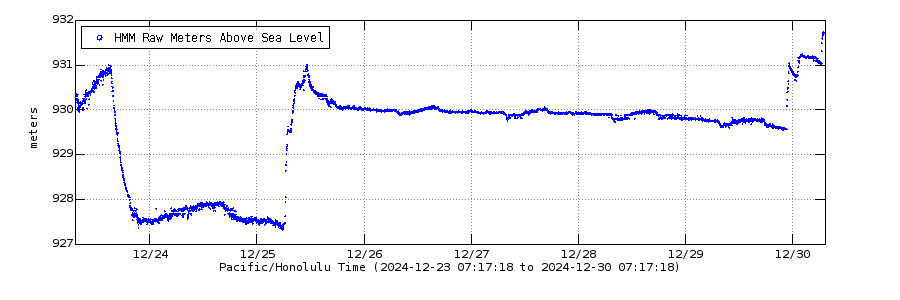
Each episode shows up on the tiltmeter: the summit swells (inflation) before fountaining and drops sharply (deflation) while lava erupts. Charts by USGS HVO.
Volcano, weather, tsunami and earthquake alerts from USGS and the National Weather Service. This page is not an official warning service: always follow Hawaiʻi County Civil Defense and park rangers.
Checking USGS and National Weather Service alerts…
Plain answers to the questions people ask most, based on USGS Hawaiian Volcano Observatory reporting.
The answer changes by the hour, which is why the status at the top of this page is pulled live from the USGS Hawaiian Volcano Observatory (HVO). Since December 23, 2024, Kīlauea has erupted in episodes from vents inside Halemaʻumaʻu crater: hours of lava fountaining followed by a pause of days to weeks. During a pause you may still see glow from the vents at night on the webcams, but no fountaining.
An episode is one burst of sustained lava fountaining. HVO numbers them in order (episode 1, 2, 3 and so on). Episodes have generally lasted less than 12 hours, separated by pauses of two weeks or more, though the pattern is not fixed. Fountains have reached hundreds of feet high, and fallout has buried or destroyed cameras near the vents. The episode archive lists every episode by date, with start and end times, duration and tilt from USGS.
There is no fixed schedule. Between episodes the summit slowly swells as magma refills the reservoir beneath it, and HVO watches the tiltmeter at Uēkahuna (station UWD) to judge when pressure is approaching the level that triggered past episodes. When the pattern is steady, HVO publishes a forecast window for the next episode in its daily update; when it is not, HVO says more data is needed. The tilt chart above shows the same data HVO uses. Treat any forecast as a range, not a promise.
For fountaining, start with the V1cam (west Halemaʻumaʻu) and V3cam (south Halemaʻumaʻu) views or their live video streams. The KWcam panorama shows the whole crater and plume. At night or through thick fume, the F1cam thermal camera often shows activity the regular cameras miss. The rift zone cameras watch areas that are quiet most of the time but would show any new outbreak.
Cameras record real darkness at night, so a black image means there is no glow from lava. Clouds, rain and volcanic gas can also hide the view, and cameras near the vents are sometimes damaged by fountains and may not be repaired right away.
USGS uses four ground-based alert levels. Normal: typical background activity. Advisory: unrest above background levels, or activity that has decreased but is still being closely monitored. Watch: heightened or escalating unrest with increased potential for eruption, or an eruption underway that poses limited hazards. Warning: a hazardous eruption is underway or imminent. A parallel aviation color code (green, yellow, orange, red) describes ash hazards to aircraft. See USGS alert levels.
During active episodes, Hawaiʻi Volcanoes National Park often opens viewing areas along the caldera rim, but access changes with gas levels, fallout from fountains and crowding. Check the park's current conditions before you go, stay on marked trails and in open areas, and respect closures. Volcanic gas is dangerous for people with heart or breathing conditions, infants and pregnant visitors.
Vog is volcanic smog: sulfur dioxide gas from the vents reacting in the air to form a haze. Usual northeast trade winds carry it southwest over the Kaʻū Desert and around to the Kona side; when winds turn south (Kona winds) it can reach Hilo and other islands. The wind reading in the weather panel shows which way the plume is likely heading. The vog dashboard has health guidance and air quality readings.
Kīlauea is one of the most active volcanoes on Earth, on the southeast side of the Island of Hawaiʻi. Its summit caldera, Kaluapele, holds Halemaʻumaʻu crater, home in Hawaiian tradition of Pelehonuamea, the akua (deity) of volcanoes. The volcano erupted almost continuously from its East Rift Zone between 1983 and 2018; the 2018 lower East Rift Zone eruption destroyed more than 700 homes and was followed by a collapse of the summit. Eruptions returned to Halemaʻumaʻu in 2020, and the current episodic fountaining eruption began on December 23, 2024.
Non-commercial, official and educational sources.